The difference between cognitive behaviour therapy (CBT) and counselling…

Unfortunately you won’t find an accurate definition in the dictionary (or even the Bible) to find out what a counsellor is: – the Oxford English dictionary says that a counsellor is an advisor- this is wrong!  Sometimes counselling is used as an umbrella term for all talking therapies – but again this is a mistake – the umbrella term for talking therapies and also for other therapies like art/music/dance therapy is Psychotherapy. Obviously there are similarities between counselling and CBT therapy i.e. they both may work with similar clients and both will use empathy and unconditional regard with their clients as well as active listening techniques. I have been told that I am good at explaining complicated stuff and simplifying it, which is what I will do in this blog – but sometimes that may involve fudging it a little!

Anyway here are the differences:

  1. Counsellors  just listen – they do not advise, whereas a CBT therapist will use psycho-education and share the latest research with their clients. CBT is collaborative and a good CBT therapist will offer tools to try, whereas a counsellor won’t.
  2. Most CBT therapists are psychologists, wheres most counsellors are not (unless they are a counselling psychologist!) And it takes 7 years to train as a psychologist. Most psychologists have a doctorate.
  3. “Psychologist” is a protected title by the government agency HCPC, whereas “Counsellor” is not; therefore in theory someone with just 6 weeks training could call themselves a counsellor.
  4. Historically they have different origins; a counsellor comes from the Freudian/Germanic schools of thought, whereas psychology (as it is today) originated with behaviourists like Skinner in America.
  5. Psychologists are scientists, counsellors are not. Therefore a psychologist can carry out research, as well as working clinically.

Ultimately it may come down to how much you can afford to pay too! However whether you see a counsellor or a CBT therapist, they will take your concerns seriously and help you change or accept the difficult situation you find yourself in, in order to help you live with a positive attitude to your mental health.
cbt-therapy-men

Sexuality…

kinsey-scale

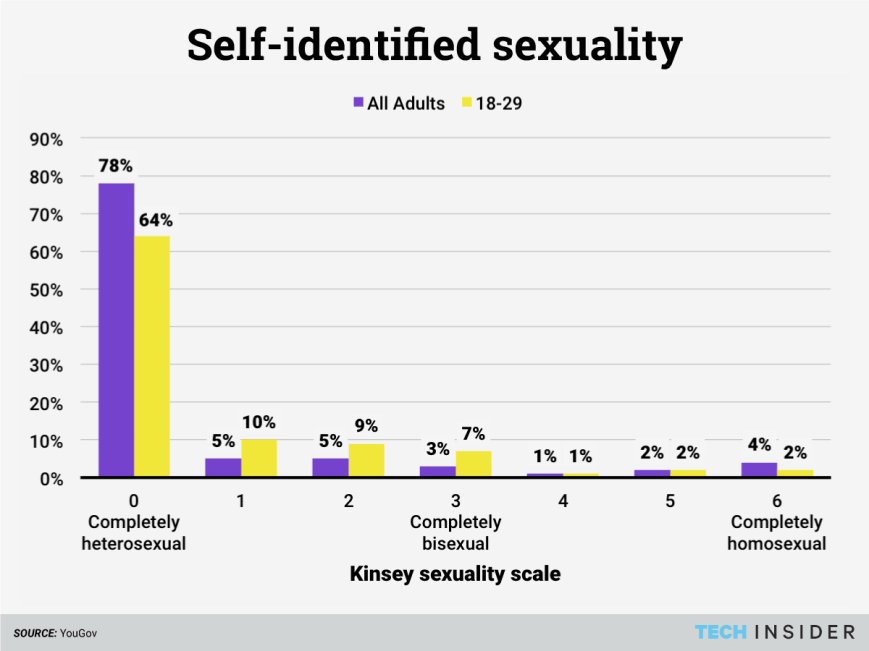
So I have been discussing with some friends recently, the idea that sexuality is on a continuum a bit like personality traits are. Let me explain: the church thinks that to practice homosexuality is a sin (but hopefully it will change its mind on this soon); and psychologists think that you should be whoever you are supposed to be and that it is not good to repress your nature (fortunately homosexuality is no longer classed as a mental illness in the DSM.)  However is it really as black and white as that? As a CBT therapist I discourage black and white thinking in my clients as it is rarely helpful.There are always the grey areas in-between and that is not the same as sitting on the fence! In the area of sexuality some would even claim that everyone is bisexual and we simply make choices based on the people we like. However if you look at the scale above (based on self-reports in the USA) sexuality does seem to be on a continuum with a bias towards being heterosexual; and it seems that young people are embracing that more so.

Unfortunately people scoring one/two on this scale may try to hide the fact that they are not completely heterosexual and then  in doing so this may cause cognitive dissonance and then possibly homophobia. Looking at this graph though does ratify why the LGBT communities use the rainbow as their symbol.

Stress at work?

So some people might say that they don’t get stressed at work, because they love their job and are passionate about what they do – I would say those people are few and far between – most of us work because we get paid for it. If we enjoy our work that’s a bonus and if you, like me, prefer to work for yourself that can be great too. However most people don’t have that option, because they need a regular income to pay the bills. So if you occasionally feel stressed at work, here are some tips that might help you:

  • If your boss is having “a go” at you, and this could happen quite often, because most managers are not trained in how to manage people – then just look at their eyebrows and focus on them.
  • Take a break during the day – even if it is for just a short while – away from the office. If you eat your lunch at your desk, then find some other excuse to get out for a brief walk.
  • Use mindfulness.
  • Remember that most things that don’t get done today can be done tomorrow!
  • Make lists in order to prioritise, but limit yourself to one a day.
  • Be assertive, rather than passive/passive-aggressive or aggressive.
  • Allow some time to share your day with someone special in the evening, but put a cap/time-limit on it, otherwise they will get stressed too!
  • Find a good friend at work who you can trust 100% in order to be able to confide in someone who will understand.
  • Make sure your social circle (and that includes Facebook) includes more people who are outside your work network, so that you don’t end up “talking shop” all the time.
  • Spend a little of what you earn each month on a treat for yourself, so that you don’t feel like you are just earning to pay off bills/debts.
  • Sometimes you have to take work home with you, but again put a time limit on how long you spend working at home. And in reverse you can then “home from work” too when necessary, for example use a spare moment at work to book that dentist appointment.
  • Constantly checking your emails will interrupt your flow – so limit that to 2/3 times a day.
  • Remember that you work to live, you don’t live to work.

Nobody thought of bringing a headache pill to the party?

Here comes the groom?

So my son has told me recently that he is now engaged to his girlfriend and that got me thinking again about weddings and marriage. Something I have done quite often as I have been married twice and I am the offspring of divorced parents.. Also when I was a theologian (before I was a psychologist) I had very strong views on  remarriage, especially with regards to the church. Marriage and the wedding service have undergone many transformations in the last 20 to 30 years and as of today the URC are now marrying same-sex couples in church – so it shouldn’t be long before the Anglican church follows suit! There are no ends of different venues where you can get married too. With this age of supposed equality one of the thorny issues can be about surnames – she may not want to take his name and he may not want to lose his family name, so double barreled is often the answer, but then what are their children going to do? There will quite often be more speeches at weddings now too, as the mother of the bride may want to say something as well as the father and the bride herself of course – it’s not only men who can make good speeches.Women don’t always want to wear white either – after all the only virgins in the place will probably be the child bridesmaids! And it certainly seems that the veil is often not worn now, quite rightly. But what about the meaning of the service:- is it just a legal document? In which case a civil partnership would be enough, or is it just an outmoded piece of theatre (as my father told me when I first became engaged); or is it a sacrament ?Or….

The author Elizabeth Gilbert (who wrote “Eat, Pray, Love”, which was made into a film starring Julia Roberts) has also written a book about marriage, which I found helpful when preparing for my second marriage; (yes preparation is more than just choosing the menu and flowers – it is a commitment and therefore should not be undertaken lightly i.e. don’t listen to the words of the Bruno Mars song!) It’s called “Committed:a skeptic makes peace with marriage” and as well as being personal it was well researched. It seems the best marriages are those undertaken when you are older i.e. in your thirties or forties, so the present trend of having the children first is not such a bad one. Marriages and weddings seem to work best when there is equal interest and commitment from both parties, so maybe one day we’ll have a service for heterosexuals when it is the groom who walks down the aisle!!  Or….
Kevan the groom

The pros and cons of Facebook…

…So Psychologists have carried out  research on Facebook users and they have come up with some pretty unsurprising results: extroverts have more friends on Facebook, people who post alot of selfies tend to be narcissists and it can decrease loneliness depending on how it is used. My personal experience of Facebook has been both negative and positive:

Negatives:

  1. I have lost a friend
  2. I have embarrassed my children
  3. Other people have gossiped about stuff that I put on Facebook just for friends.

Positives:

  1. I have been able to get in touch with friends from the past.
  2. I have been able to discuss films/books/music with friends I don’t see very often.
  3. I have been able to promote my website and these blogs.
  4. Sometimes people’s posts/memes make me laugh.
  5. I have been able to share and see photos of family members.

So more positives than negatives. Therefore I thought I would put together a few tips for the best use of Facebook:

  • Don’t have more than 100 friends
  • Unfriend/block people who annoy you
  • Keep your posts and photos private not public
  • Don’t boast or moan too much
  • Don’t friend anyone unless you know them in the real world first
  • Don’t friend work colleagues
  • Be careful what you like as it shows up in your friends’ news feed
  • Only use it if it is increasing your positive emotions rather than negative ones!

If anyone wants to know where I get these ideas from then please leave a comment or question below.

The truth hurts?

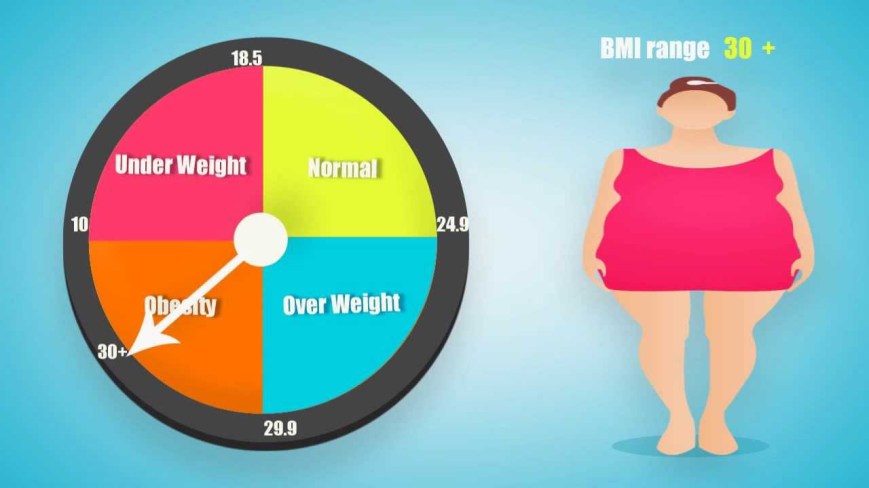
So I was having a discussion with a colleague (another health psychologist) a while ago and she asked me if it was okay to call people fat. It led to an interesting discussion – some of which I will share in this blog.Obviously it is not ok to call people “fatty lardarse”!! And the terms fat/fattie have become pejorative. However what about saying someone is obese? There is a lot of evidence that shows that having a BMI over 30 (which means you are obese unless you’re an athlete or a weightlifter) is associated with increased health risks such as type 2 diabetes and heart disease. And saying that you have  big bones is the oldest excuse going – only athletes and those who exercise alot have denser bones.

So is it ok then to tell someone they are obese? Obviously health professionals can (and that includes health psychologists) but what about if you are a friend or a family member? Well it depends on (a) whether they have asked you or not and (b) on what stage they are in for their health behaviour – so someone who is in the pre-contemplation phase will not want to hear it as they are quite happy as they are, but someone who is in the contemplation or preparation stages will probably have started questioning themselves e.g. through discussion on Facebook. However some people  in the contemplation stage may be experiencing cognitive dissonance (conflicting thoughts) and therefore may react negatively when you tell them they are obese.

However it does work the other way too – some people who think they know everything about everything may tell a family member or friend they are fat and need to do something about their weight – however that is just an opinion – for example if someone has a BMI of 24 and a waist of 32 they are healthy, but maybe they have an apple shape which would result in a bit of a tummy – so others may think they are overweight when they are not. And remember that opinions are not facts, so you don’t have to believe them.

In conclusion then, can you tell someone they are obese? Well unfortunately some people now think that the term “obese” is also pejorative – when in fact it is just a clinical description of someone’s health, like saying they have arthritis. Also the other problem (see professor Jane Ogden’s research on this) we in the West have become used to a bigger average body size, so that overweight has become the new norm and people think being obese only applies if you are over size 18! So to answer the question: yes you can tell them they are obese – if you are a health professional or if they have asked (either directly or indirectly) and if the person in question is not an athlete and you know they have a BMI over 30. Otherwise keep your thoughts to yourself!BMI chart

The menopause…

So I know my readers are of varying genders and  ages, but I do believe quite a few are women of a certain age, so I hope this blog will be of interest! The good thing about being a health psychologist is that you can use some of your research skills to “sort out the wheat from the chaff” when looking up articles on the internet.

There are four main triggers for the onset of the menopause:

  1. The onset of your periods as a teenager – but it only works one way i.e. if you start early it doesn’t mean you reach menopause early (the average age of women in the UK  reaching the menopause is still 51, despite girls reaching puberty at an age earlier than before – mainly due to childhood obesity). However if you start your periods later e.g. as late as 18 then it does mean you will probably be older when becoming menopausal.
  2. Genetics i.e. you will reach the menopause at approximately the same age as your mother did, but there are also mutations on genes that sometimes cause premature menopause.
  3. Chemotherapy and/or ovarian surgery.
  4. Smoking can cause women to reach an earlier menopause.

And there are just three physical symptoms of the menopause:

  1. Periods becoming less regular and then stopping.
  2. Hot flushes/ night sweats.
  3. Vaginal dryness.

Some women can be prone to loss of bone density (which can then cause osteoporosis) but this can be improved with regular exercise. All the other symptoms are psychological and can therefore be treated with CBT (cognitive behavioural therapy). So for example if middle aged women become anxious or depressed, it is more likely to do with any of the following (or a combination) and not hormonal changes: bereavement / divorce / empty nest syndrome/ caring for elderly parents/ unemployment. Sleep disturbances can be caused by the anxiety/depression or by the night sweats; and then lack of sleep can  make women more likely to cry and/or be angry/ irritable. So if you find yourself flying into a rage for “no reason” it may be time to get professional help in the form of therapy, because otherwise you might end up a crabby old woman – and we all know one of  those don’t we?!

hot_flashes

Can you ask for what you need?

…So a report has been sent round to all the British insurance companies advising them and their solicitors not to offer either physiotherapy or CBT/ psychological treatment to anyone who has an accident – of any kind, either at work or in the car or going about their daily business. This is because some companies have been poor at paying out for personal injury claims. So whereas it used to be the norm that you would be offered these treatments, it now isn’t – so you have to ask. This is unfortunate as people who have PTSD, for example, are probably not in the right frame of mind to ask for treatment. However you are entitled to it if you need it. So, although I do not wish for any of my readers to have an accident of any kind – if you do, please ask your solicitor to claim for treatment and this can be easily arranged through any good rehabilitation agency.

Celebrities dropping like flies…

So a lot of famous people have died this year so far: Terry Wogan, Ronnie Corbett, Alan Rickman, David Bowie, Victoria Wood and now Prince. Young people may not care – I certainly know one or two under 40s who are fed up with all the “sentimental” reporting of these deaths on social media. However if you are over 40, the chances are that some of these artists have been part of your childhood/adolescence/young adulthood. And you have every right to be sentimental if you wish! I certainly would have cried buckets if it had been Mick Jagger.

vwood

It can be quite amusing to think of Victoria Wood telling a risque joke to God or to think of Bowie and Prince playing for the angels. People in the West, including Christians, Jews and Muslims, mostly believe in an afterlife, but psychologists and neuroscientists know that once your brain dies and the neurons stop firing, that is it – so psychologists who are Christians have to deal with cognitive dissonance on a regular basis. However whatever we think of heaven, we still have our memories of these people and they can be bitter-sweet: bitter because we are sad that they have gone, but sweet because they remind us of our youth; bitter because they may have died too young, but sweet because they provide a connection with people at the gym or work etc; bitter because we may now never see them live, but sweet because we have their songs or acts readily available on the internet – and there are always those tribute bands!

My memories of three of these artists are:- performing a Victoria Wood song in a leotard at college with an amateur dramatic group, dancing to Jean-Genie at a great party in the 80s and watching my wedding guests listening to Purple Rain minutes before I walked down the aisle in a purple dress. What are yours?

The drugs don’t work…

So a warning – this blog is going to be controversial! Although saying that I am actually on the same “song-sheet” that many other psychologists are “singing” from. In fact I would not be so bold as to say the drugs don’t work – this is a line from a song by The Verve, but I would say only some drugs work for some people with regards to mental health problems. When you have a headache you take a paracetamol and usually it works, but with something more complex like joint pain taking ibuprofen etc is not enough – you have to visit your physio and do the exercises – in other words in order to improve or get better you have to work at it; it is rather an immature viewpoint to think that drugs work like a magic wand and it is the same for mental health as it is for physical health.However I would be so bold to say that maybe it should only be psychiatrists who prescribe drugs for mental health problems and not GPs and that unless people are suicidal they should be required to attend at least 6 weeks therapy (usually CBT) before being put on drugs.If there is too long a waiting list for therapists then the NHS should employ more (including health psychologists!) Or people should be more prepared to pay privately – like they do for their hairdresser or their osteopath.

Unfortunately society seems to be fascinated by “brain porn” at the moment – in other words they think that the MRI scans etc. tell the whole story –  you are mentally unwell if you have a “faulty gene” and therefore you just have to find the right drug to correct that gene. There are three things wrong with this attitude: (a) the brain is plastic and is affected not just by your genetic makeup, but by other things e.g. exercise and social context (and by exercise I mean the sort where you get out of breath – not a stroll to the car from the office!) Also (b) if we take depression as an example it will never be down to just one gene, as it is not a discrete condition but rather on a continuum; and finding faulty genes is not going to always help deal with the problem, as for example they have found the gene that causes Huntington’s disease, but are still no nearer to finding a cure for it. And (c) there are so many other things which could cause or exacerbate depression, such as lack of social support, loneliness, unemployment, alcoholism, an unhappy childhood, traumatic life events, poor cognitive coping styles (usually learnt from parents) etc. – the list goes on. Also we are too quick to put people into categories. I wish I  had a pound for every time I have heard that one in four people have a mental health problem – well if you look at the personality variables at least 75% of us will score more than 2/10 on the neuroticism scale, so there are lots of people out there who could potentially struggle with anxieties etc.Whereas some people with depression might like to think they are out of the ordinary and nobody else could possibly understand them, there are a lot of people with depression who would just prefer to be normal, so labelling them with a “faulty gene” does not help them at all. It makes them think they are stuck with it for life, when in fact most people can recover.

So I am not saying I am anti pharmaceuticals – without them I would probably have died of an asthma attack and had a lot more babies! I am just saying that there should be a great deal more care taken with who gives out drugs for mental health problems and when; after all many antidepressants have nasty side effects such as weight gain, sleep problems, anxiety attacks and addiction.Whereas therapy has no side effects at all!drugs