Professionalism…

This is not just a blog for other professionals but for anyone really, including clients from the past, present or future. What does being professional really mean? Actually it just means you are paid for what you are qualified to do, as simple as that – after all you get professional hitmen! It is a separate issue from an ethical code of practice – as psychologists we follow the guidelines given by the BPS, which are just common sense really e.g. do not form inappropriate relationships with your clients / participants. We also like to practice what we preach i.e. a health psychologist would like to be coping well with their physical health and a forensic psychologist would not be a criminal! Of course it goes without saying that as good citizens we don’t break the law. Also all good psychologists would want to have good mental health themselves.

I remember when I was studying for my doctorate that we took a module in ethical, professional and legal issues. And the lecturer (who was also a priest) suggested that it was ok for plumbers to swear and get tipsy outside working hours, but perhaps not appropriate for psychologists! I disagreed with him. I have even come across discussions on Linkedin that suggests that psychotherapists should be teetotal!! However we are human and it is that human empathy that appeals to our clients – unlike psychiatrists we don’t think we are God! My clients don’t have problems with me wearing leggings and working from my front room – rather they value my warmth, my life experience and my ability to explain complex psychological issues etc; as well as being someone who can give them undivided attention for 50 minutes each week- who else really gives you that?My PhD graduation

A psychologist’s guide to you and your baby…

anne geddes baby

I thought as “Call the Midwife” was coming back on soon and I can’t resist an Anne Geddes’ baby photo, I would write here about The Psychologist magazine’s top ten tips about mothers and babies (Jan. 2016):

  1. Babies learn to smile and laugh at a very early age and do this in order to gain your attention, so engage with them  and you will be rewarded; (better than being on your smartphone surely?)
  2. Learn about postnatal depression before the birth and then you will know what to look out for and how to get help if necessary.
  3. Garner support from other mothers by joining a group e.g. parents and toddlers, baby yoga etc. – these friendships will often last a lifetime.
  4. Playing with your child can sometimes get tiring or boring, so hand over to his/her dad whenever possible as babies and toddlers need age appropriate  rough and tumble play and will benefit from more than one attachment figure.
  5. The language instinct is natural for human babies – so no need to worry about it and it will still happen naturally (albeit with a slight delay) if the parents speak two different languages – talking to your child is an important part of bonding even if they don’t understand what you say!
  6. Young babies can sleep anywhere during the day even with a background noise such as a washing machine (not sudden noises) and will then learn the difference between night and day. If after 6 months night time sleeping is a problem there is plenty of help available for sleep training from your health visitor or other health professionals.
  7. Hold and cuddle your baby as much as possible as it will help keep them calm, especially so with newborns
  8. Babies love faces and if you can not be there for him/her 24/7 then find a suitable cuddly toy with big eyes, a nose and a mouth –  I remember my daughter used to love looking at an owl nightdress case!
  9. Breastfeeding is a journey – but nearly always worth it – there is plenty of support available too if you need it e.g. from NCT breastfeeding counsellors (you don’t have to be a member) and I have a whole PhD on the subject if anyone wants to know more!
  10. If your own mother/mother-in -law tells you there are certain rules you must follow – don’t listen – nine times out of ten your instincts will be correct and health professionals are more likely to have more upto date knowledge than someone who had a baby 30 years ago.

Christmas and families…

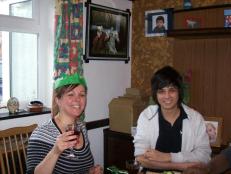
Seb and me at Xmas I have just been looking on the internet to find out how many people have problems with families at Christmas time and it seems to be alot! I think this is primarily to do with unrealistic expectations and we can also lay some blame with Hollywood and all those Christmas songs sung by the likes of Nat King Cole. We expect Christmas to be perfect and it never is: we don’t often get a white Christmas and not everybody likes sprouts!

We seem to be more organised about our shopping lists than organising who we see and when. It’s not great if elderly people who are on their own for most of the year are also left on their own on Christmas day, but some others may actually like to be on their own. Also if we don’t see our loved ones during the holiday season, we can always see them before or afterwards;  it’s the regular contact and the quality time that counts – not which day of the year it is. After all December 25th is probably not even Jesus’ exact birthday. It is the time of the year when we celebrate the birth of a man who came to bring peace to our world – if we can’t even have peace within our families what hope does the world have?

Sleep…

We have all heard the expression “sleeping like a baby” but how often do we actually do that now we’re not babies? Not very often I would guess; we don’t sleep like logs either – in fact as we get older we wake more often in the night and this is normal. Most of us will know about sleep hygiene e.g. sleeping in a dark room (with our mobile phone/tablet switched off), making sure we’re not too hot or too cold, having a regular bedtime routine and not drinking too much caffeine or alcohol before bed; but that alone does not always work if we’re having sleep problems.

As part of my work with the University of Warwick I have been learning about sleep restriction therapy (SRT) which should really be called bed restriction therapy! The aim is to improve the quality of sleep rather than the quantity by allowing the participant to only stay in their bed for the time that they normally sleep for (which is worked out from sleep diaries); so that they go to bed and get up at the same time every day, they don’t have daytime naps and they only turn their lights out when feeling sleepy. Then if they wake in the night for more than 20 minutes they have to get up and do something boring until they feel sleepy again. I have heard that this works with the majority of people who have sleep problems and I am looking forward to working with the participants on this.
sleeping-baby

The worry train…

It occurred to me the other day that Halloween is probably not a good time for some people with anxiety disorders. After all there are spiders, strange children knocking at your door, darker evenings and maybe a sense of foreboding.I have always wondered why people want to celebrate evil? Anyway if you do have an anxiety disorder of one sort or another or if you are just the sort of person that worries about lots of things then there is a solution: one of my clients calls it the worry train.

It is an idea I have taken from ACT (acceptance and commitment therapy): you imagine that you have arrived early at the station and you are standing on the platform and lots of trains are coming in and out of the station – these trains represent your thoughts – thoughts that you don’t have to pay attention to and you certainly don’t have to obey – especially if they are negative or unhelpful i.e. you choose not to get on board the wrong train.You may temporarily get on board by accident, but you can get off at the next stop.And you certainly can’t stop the trains coming into the station. Eventually they will go and the less attention you pay to these negative thoughts – the less they will come into your mind in the first place.  This is also a useful way to let passing thoughts just go through your mind when trying to meditate or practise mindfulness.

So next time you are afraid of something “going bump in the night”- just stand on that platform and let the thoughts/trains just pass on through.

Train_288499k

Harvest…

Harvest

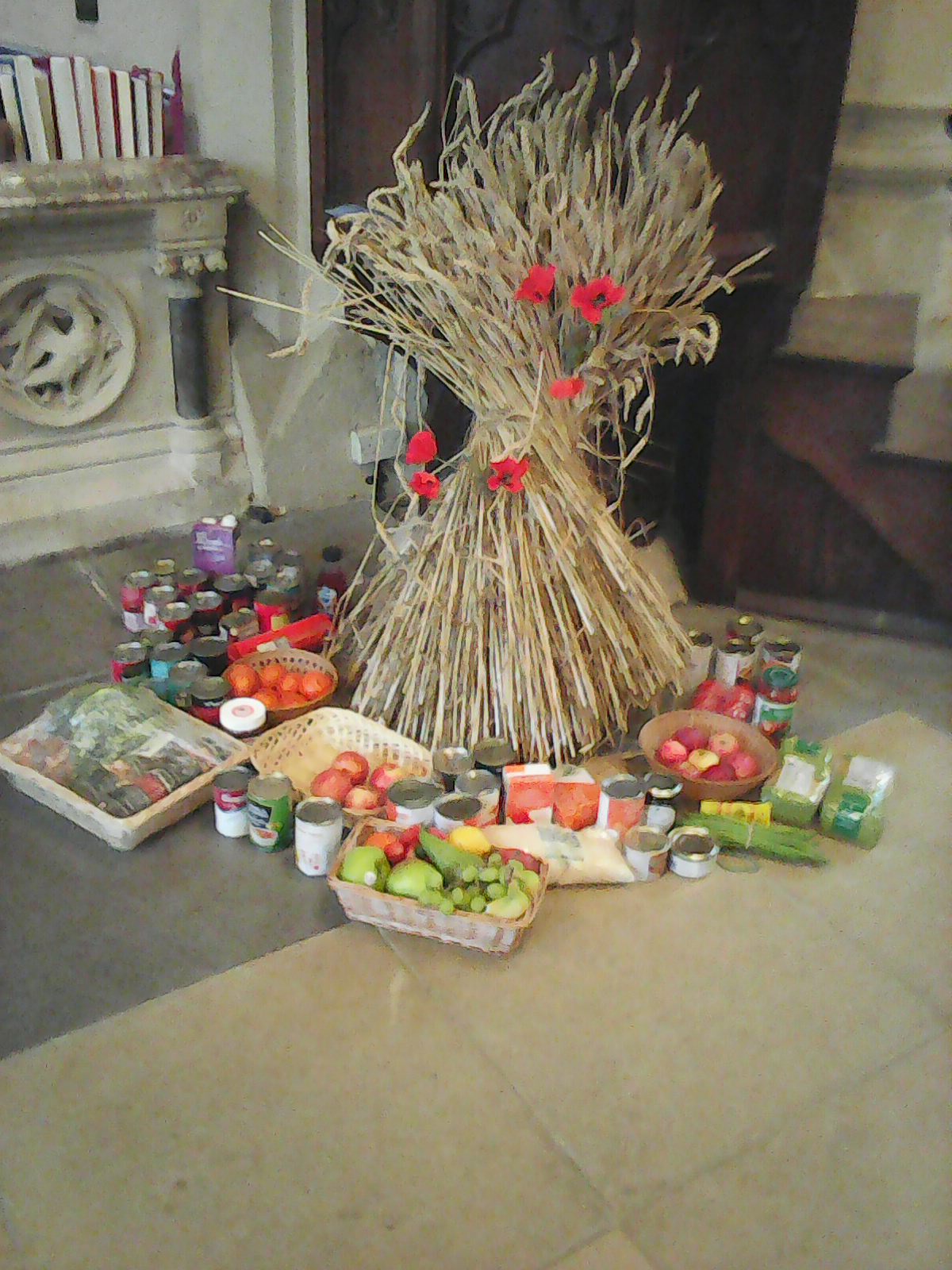
I attended  a lovely harvest festival on Sunday and it reminded me about the research on kindness; I have spoken about this before in  my blogs, but will do so today from a slightly different angle. Some people may say that the reason folks take along fresh food or tins to the harvest festival is to show others how generous they are – that is rather sceptical. Hopefully most do it because it gives them a chance to help someone less fortunate than themselves and that in turn makes us feel good about ourselves – being kind is a win-win situation – we help someone else and benefit our own mental health at the same time.

This is why the research has shown it is beneficial for people with depression. A friend of mine who has depression recently asked people to do something kind on her birthday instead of sending her a card or a present and we did just that, but it didn’t make her feel any better as she was not the one doing the actions! It doesn’t have to be a grand gesture; it could be donating to the refugees or just simply smiling and saying hello (but don’t ask someone how they are unless you are prepared to listen to the answer).

Some people – like mothers of young children and carers spend their whole days being kind, but for people who live on their own and who work in an industry where their work does not directly benefit others could go a whole day without doing a kind action – but just making a cup of tea for someone would help. The other problem is that some people spend their time worrying about others – this is not kindness and getting stuck in a cycle of worrying thoughts is not beneficial to one’s mental health either – maybe I will write my next blog on that topic?

Avoiding the post-holiday blues…

swimming

  Does your Summer holiday seem a long time ago or are you still basking in the post-holiday glow? Are holidays actually beneficial to us? The Psychologist  asked this question and came to the conclusion that for most of us the benefits are short-lived.

  So here are some of their tips for making the most of your holiday when you get back home and back to work:

  1. Start slowly – resume work a day or two after you get back – don’t plunge straight in and then gradually build back up to your normal working pattern – be kind to your self.
  2. Take control –  you don’t have to answer emails or work calls during the evening or the weekend, unless you are a medical doctor on call! You can determine when you are available – you control your pc / smartphone – don’t let it control you.
  3. Cherish memories – keep a special holiday pic to hand, cook the dishes you enjoyed on holiday, put that special shell you found on the beach in your bathroom and keep in touch with friends / family who went with you.
  4. Spread your AL – take weekends away occasionally so your holiday isn’t used all up in one glut. That way you don’t have to have a perfect holiday each time.
  5. Make each day special – have a healthy work life balance – by going for a swim after work, or having an evening in together with your loved ones, or by visiting that local art gallery in your lunch break or by really listening to the words of that song you like on the radio.

Nature or nurture…?

There have been quite a few articles/documentaries on twins on both the TV and the radio recently, which got me thinking again about nature and nurture. Twin studies are something that psychologists love to hear about, as identical twins share exactly the same genetic make-up and therefore any differences will be due to their upbringing and their environment. Some twins even have the same dreams and apparently there are twin ballet dancers in Brazil who have exactly the same height, weight and body mass as each other. There are also twin health psychologists who are both professors – albeit not at the same university. However there are also identical twins who have different sexual identities and others who as they get older start to look different; as from the moment we are born we see the environment in a slightly different way from our siblings and will start to interact with our parents in different ways.So this explains why siblings can be so different as they only have some genes that are the same and they are born at different times in their parents’ lives and also parents tend to interact differently with their children depending on their gender, their birth order, their personality (yes it is a two way street) and a myriad of other variables – even if like me they have tried to treat their children the same! So if on a bad day you compare yourself unfavourably with a sibling or a twin – don’t give your parents a hard time about it – as most parents do their best.identical twins

Hell is other people????

Crowd of peopleSartre said that hell is other people and sometimes that seems to be the case- think about last time you were on an over-crowded beach, or waiting for a busy commuter train at a London station, or queuing in a traffic jam, or trying to do Christmas shopping on a Saturday! Then you might just wish you could click your fingers and be on your own. However what about that brilliant concert or gig you went to? Or those hordes of well wishers on your wedding day? Or that sweaty dance floor? It wouldn’t be the same without those other people around you.

In fact the well known positive psychologist Martin Seligman talks in his latest book about the importance of connectedness with other people to our well-being. His “formula” for happiness is PERMA: positive emotions, engagement with the world, meaning, achievement and positive relationships. We all hopefully value our family and friends, but even in a crowd we can sometimes just share a positive moment with someone and that will add to our day. Also we can use the mindful practice of loving-kindness meditation on a regular basis which involves just thinking positive thoughts about the people in our lives- they are not always angels (as we are not either!) But sharing time with good people is certainly not hellish.

Green exercise…

Green exercise

Quite often, if I want to have some quiet time to be on my own, I take a walk up Solisbury Hill. This is green exercise – when we walk or ride our bikes in the countryside i.e. when we exercise outside – it is different from exercising in a gym. Research has shown that people who take part in green exercise often work harder or for longer than they normally would in the gym without even realising it, presumably because they are enjoying it more. I am not talking about a gentle stroll around the shops, but walking or cycling (or running even) where you get out of breath for at least 3 minutes and a bit sweaty!

You can really be in the moment when out walking too – for example you can feel the sun on your face and look at the butterflies and hear the birdsong – so green exercise is good for mental health as well. Even better if there is no time limit.