Tips for revision and exams…

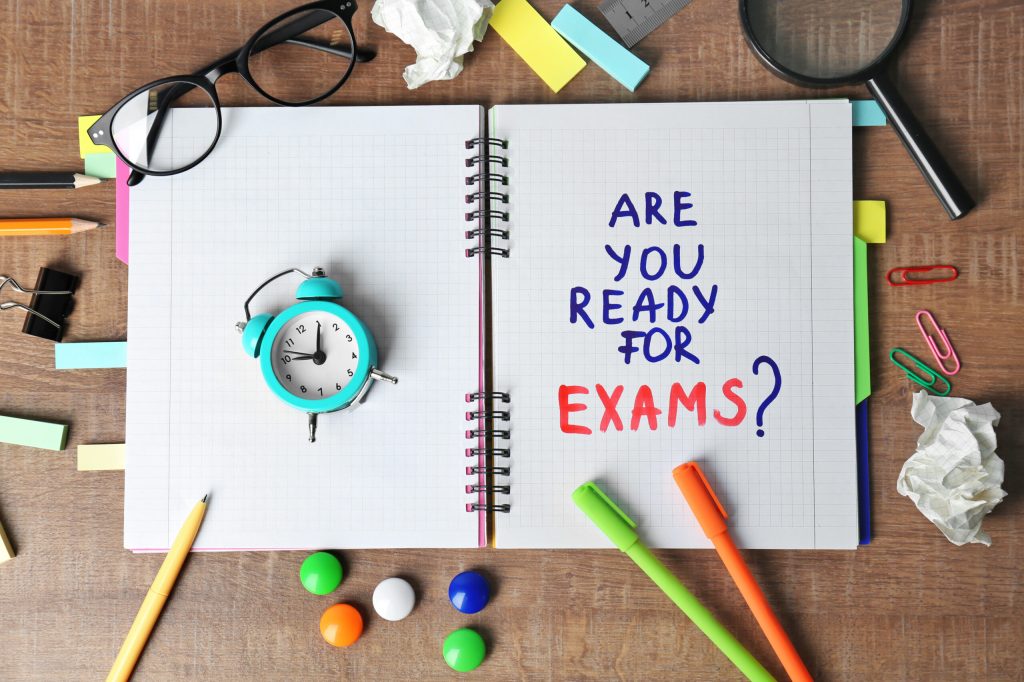
Here are some tips for exam season that I have adapted from The Psychologist:

  • Address your weaknesses by doing practise tests to find out what they are so you can concentrate on them.
  • Design a specific and varied revision timetable well in advance, that includes time off!
  • Try explaining the more complex topics to your parents or siblings.
  • Use whatever motivates you drink and food wise, as well as a quiet place and good stationery.
  • Revise things that are hard to remember before going to sleep and then you are more likely to dream about them and remember them the next morning.
  • If exams make you anxious use whatever helps with the anxiety, whether it be the breathing techniques or a lucky item to take in with you…
  • If you are female and taking exams in the sciences – talk to your friends and remember you belong with that subject just as much as your male peers.
  • Reframe nerves as excitement!
  • Remind yourself that this too will pass.
  • If you don’t do as well as you hoped try to think of your future self in 5 year’s time and what you might be dong then and what he/she might say to you.

Narcissism…

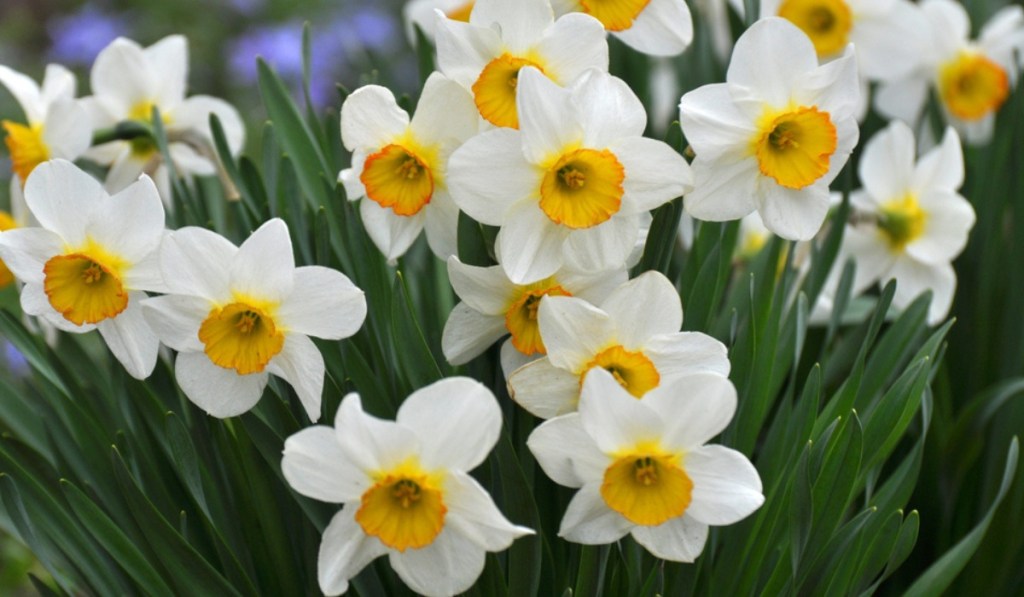
Most of us will have learnt about the god Narcissus during our classics education at school. However not all attractive people are narcissists and it is certainly the case that not all narcissists are attractive!

As a personality trait narcissism is on a continuum like any other personality trait, but those at the top end can be labelled as having narcissistic personality disorder. These people tend to have a high sense of entitlement, like to control others, talk about themselves all the time and only like to be associated with the “top” people! It can be caused by being put on a pedestal by one of your parents in childhood and then cruelly knocked off that pedestal by either the other parent or peers or school teachers. It is a psychological defence mechanism and can also be a learnt behaviour and/or inherited from a narcissistic parent.

If you have a narcissistic friend it is relatively easy to avoid them. However it is more difficult when it is a member of your own family or someone you work with. And when you start to stand up for yourself the relationship can become toxic….If the narcissist is an in-law you can again try and avoid them, but if it is a member of your family who you care about it is more difficult to manage… the best thing you can do is hold onto your self-compassion and don’t allow them to gaslight you.

Breathing…

A recent study found that the type of breathing I teach to my clients is the best type for anxiety, stress and anger. Better than the types of breathing taught for yoga /Pilates or meditation…. And quite often when I ask them in the final session what helped them most – it is usually the breathing technique…

Unpaid labour and mental health…

I had a male client the other day who came into my place without wiping his feet and then walked muddy footprints over my floor…Maybe he didn’t notice? Or maybe he didn’t care because I am a woman?!

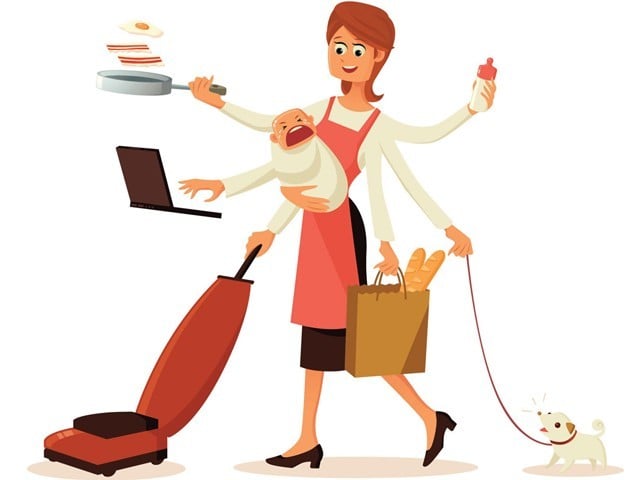
In the Psychologist this month it says that in the UK women do 60% more unpaid work than men… and in other places, especially developing countries it will be more. Women spend more time cooking, cleaning, in childcare and elderly adult care than men do and that is often on top of a paid job too. A recent study found that this impacts women’s mental health more so than it does men’s – not just because they are doing more, but also because they are less likely to be thanked for it.

My husband and I have a fairly good divide on domestic duties and I often tell people I am lucky – but I shouldn’t even have to frame it like that – it should be the norm! And we often thank each other… However next time this client comes I won’t expect my husband to wipe the floor after him, but I will be asking said client to wipe his feet…

Why are we sad?

I am not sure that the very young and the anti-monarchists are sad, but judging by the 1000s of people that have visited her coffin in state, many of us are sad at the death of our Queen Elizabeth II. Some older people will remember a previous monarch, but those of us born in the 50s, 60s or 70s will only have lived under this Queen.

She has been with my generation throughout our whole lives – from the stamps we use to the prayers in church to the name of one of the best rock bands and all those Jubilee celebrations…. We are also old enough to remember how badly Charles treated Princess Di and therefore may have reservations about him as King?

Some say it is sad because she reminded us of our own mothers or grandmothers (even if they haven’t died yet). But it is perhaps more than that – this death triggers all our losses: past, present and future…. However it is ok to be sad and this too will pass.

Becoming a Mum during the pandemic…

My daughter and my daughter-in-law both had their first babies during the third and first lockdowns respectively; so when I noticed an article about welcoming new life under lockdown (by Gray and Barnett) in the latest edition of the British Journal of Health Psychology, I thought it would be an interesting read and it was, and an emotional one too…

It was a piece of qualitative research and it came up with two themes: one “The buck stops with me” and two “Disrupted motherhood”. In the first theme, the mothers spoke abot feeling overwhelmingly responsible for this new baby and I think this is often the case with new mothers anyway, but it seemed worse for them during Covid times, partly because of the confusing information given out by the government and social media on the levels of risk, which meant mothers were often imposing harsher lockdown restrictions than those that were set.

The second theme had two parts to it; firstly the negative aspect of the disruption being destabilizing.: I.e. they had to change birthing plans and they missed out on family and friends seeing their new-born, which in turn removed a significant marker of the transition to motherhood.. One of the mothers spoke about the thwarted desire of a grandmother to hold her first grandchild as visceral and overwhelming….The silver linings of this theme though were more time to breastfeed and also more time with the father around to help out and bond with the child.

The implications of this research for future pandemics are in three key areas that could be improved on if anything ;like this ever happens again:

  1. Better risk communication.
  2. Birthing plans being more flexible and health professionals allowing the fathers to be there throughout labour.
  3. Better postnatal support from health professionals, ideally F2F and virtual drop in clinics for mothers to attend so that they can have some peer support too.

CRPS…

Some of you may or may not know that I am a trustee of CRPS – UK, as I used to be a researcher into the condition and I have published peer review articles about it and a novella under my pseudonym Maddy Chaston, called By Her Side, which is still available as a paperback or a kindle on Amazon…Unfortunately Complex Regional Pain Syndrome occurs more often in women – usually after an injury or an operation. Some people recover after a few weeks, whereas others go onto develop a chronic condition. It is almost as common as Rheumatoid Arthritis, but very few people know about it:

The symptoms may include some or all of the following:

  • Unbearable pain in an arm/hand or a foot/leg even to light touch
  • Swelling
  • Unusual perceptions about the shape and size of the limb
  • Sweating
  • Temporary extensive nail and hair growth
  • Colour changes in the skin
  • Temperature differences
  • Stiffness and/or erratic movements
  • So if you have 4 or more of these symptoms in one of your limbs do ask your GP to refer you to a rheumatologist.

Worth chatting about…

I can tell I haven’t written a blog in a while when I am still referring to The Psychologist February edition at the end of March! Anyway an article on conversations caught my eye and I thought I would share some of the findings mentioned on this:

  • Do talk to strangers – most people are happy to engage in conversation – but they don’t because they think you won’t want to….
  • Personal (physical) space is important – but more so to women.
  • People feel more connected when they talk about deep matters – it doesn’t always have to be small talk – but don’t whinge and moan.
  • Do be complimentary -people like it.
  • Don’t overthink about what you said afterwards.

Resolutions for mental health?

So many people make new year / January resolutions for their physical health, but it is quite unusual to do so for one’s mental health perhaps? Some people might think happiness is something to aim for? But you can’t be happy all the time and it is probably unhealthy to expect that – so perhaps a better way would be to embrace positive emotions when you can (see my blog from March 2015) on the 3:1 ratio).

So maybe “finding meaning” is a better way to approach things? It is good to look for meaningful experiences in work and leisure and relationships and spirituality, but one has to remember that if one does that, there will be the accompanying anxiety that you may lose these things – so having a purpose in life is a paradox!

Perhaps being calm is something to aim for too? Mindfulness is often proposed as a way to achieve this – although true mindfulness is actually more about an inner contentment that can weather the storms, rather than just appearing serene all the time! Mindfulness can help with mental health and also with decision making, but beware of narcissists who “do mindfulness” as it could make them worse…

If all else fails try compassion – for others and for yourself…#bekind

Labels…

I guess at this time of year many of us will be writing labels for Christmas cards or presents to send…but we also apply labels to ourselves…In The Psychologist this month it talks about how labels for neurodiversity, such as ASD, are sometimes a mixed blessing; and it is the same with mental health: On the the one hand a diagnostic label can open doors to services sometimes, but on the other hand it can lead to stigma or a burden that we then feel we have to carry for the rest of our lives e.g. “I’m an anxious person”.

As a therapist I know that it is important to make a formulation about what is the matter with my clients, and therefore how best to work with them, but I don’t always use diagnostic labels, as there is so much more to a person than that. It is also the same with personality traits; we may be an extrovert or an introvert, but actually these traits are on a continuum and we can move a little up or down the scale, so we don’t have to feel we are stuck in a box that defines us.

So don’t wear the label of Scrooge or Grinch this Christmas season, just because that is what someone has said about you before…Instead get in touch with that inner child and see if you can find some joy in maybe just one thing – even if it is something small like a Winter frost on a leaf.