
When I was about 7 years old my mother tested me, by asking me what I would like to do with the last piece of chocolate cake and I surprised her by saying I would chop it in half and we would have half each. She was touched by this answer, so she let me have the whole slice. I then broke it in half and ate the dry bit first and the creamy bit second, which is what I usually did…So maybe I was quite good at delaying gratification? Obviously it would be more complicated now, as I would have to choose between the slice of chocolate cake or getting into my jeans! Researchers think this is partly to do with our genes i.e. how much self-control we have….
For the past four decades, the “marshmallow test” has served as a classic experimental measure of children’s self-control: will a child eat one of the fluffy white confections now or hold out for two later? This behavioural experiment was first carried out in the 60s at Stanford Uni, in the USA, by the psychologist Mischel and colleagues. Over a period of time following the children into adulthood, they found that the ones who delayed gratification were often more successful in their lives – better at passing exams etc and the men were probably better lovers! They have repeated the tests recently and found that it is not just down to the children’s personality traits, but also down to the environment i.e. the children who were in the group with reliable researchers who kept their promises were able to hold out for 9 mins longer than the ones who had been let down….therefore as parents we should be consistent with our children.
The funniest part of the experiments, I found, were the activities the children did while waiting: dancing, singing, napping, drawing and even sitting on the marshmallow. so that it was out of sight! Which is why I don’t keep chocolate cake in the house, unless it’s my birthday!

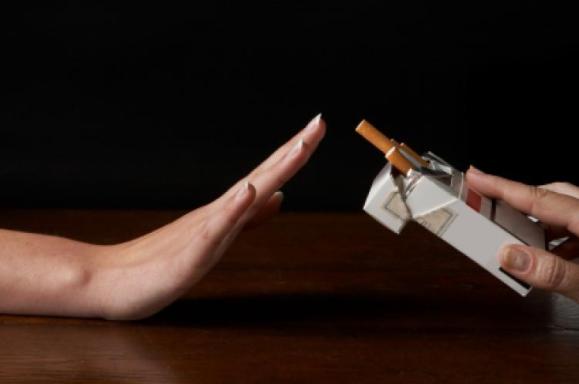
 I spoke about change at a talk in cafe church last Sunday and obviously that was mainly about spiritual changes, but it is also a good topic for this blog….Changes that are thrust upon us, such as job loss, bereavement and house moves are often the most difficult ones to cope with. Yet changes we choose can be tricky too, such as giving up smoking, losing weight and improving our mental health; a CBT therapist can help with the latter and a health psychologist with the former…However CBT is often like learning a new language – it takes time and practise for our brains to learn new ways of thinking, so no magic wand is available!
 I used to be a bit of a head banger when I was an adolescent and apparently I still am! I don’t listen to heavy metal music anymore (except for the occasional Whitesnake track) but I did bang my head as a result of a fall the other day…So I am not talking about a little whack of the head when you hit it against a beam, but a heavy fall against a stone pillar, with – as the paramedics put it – a lot of claret (and I am not talking about falling because of booze!) This resulted in mild concussion which is also called a minor head injury and just because you don’t pass out and/or vomit or seem confused, it doesn’t mean you are not concussed…Often as a result of a minor head injury you can get post-concussion syndrome, which can last from a couple of weeks to 3 months… And as this is quite common, I thought it would be helpful to list some of the symptoms here:

 I have had quite a few clients where drink has been a problem and I am not talking about alcoholism…rather the sort of dependency on drink which shows itself when someone can go all day without a drink, but once they open that bottle of wine they are unable to stop; and because they are drinking pretty much every day, they are having way over the recommended average weekly limit of 14 units… Often it can also make anxiety worse the next day too and/or exacerbate depression… Some of my clients work on this with me (as a health psychologist) successfully, but others can’t manage it and then drop out of therapy.